
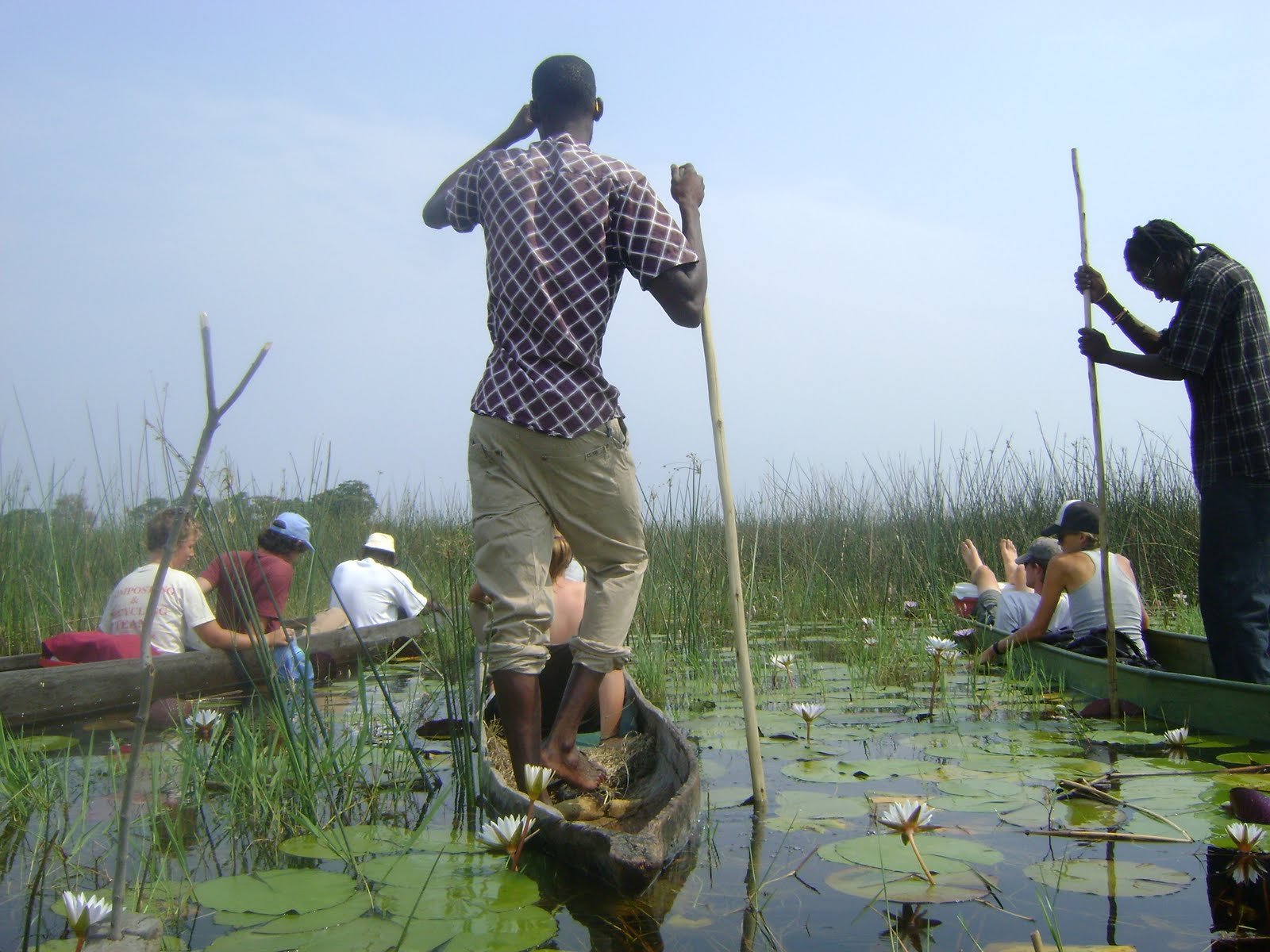
The Okavango Delta is a unique and vast inland delta in northern Botswana, formed where the Okavango River empties into the Kalahari Desert instead of the ocean. It’s a UNESCO World Heritage Site (inscribed in 2014) and one of the Seven Natural Wonders of Africa.
Key Facts
- Size: The delta covers roughly 15,000 km², but can swell to over 22,000 km² during peak floods.
- The Flood: Its most remarkable feature is that the annual flood arrives during the dry season (around June–August), drawing wildlife from far and wide.
Wildlife and Activities
The delta is home to an incredible concentration of wildlife, including the Big Five and endangered species like the African wild dog. You can explore this watery wilderness through:
- Mokoro (dugout canoe) trips for a silent glide through the waterways.
- Game drives in 4×4 vehicles.
- Walking safaris, boat cruises, and even helicopter flights.
Best Time to Visit
- Dry Season (June–October): This is the peak time for wildlife viewing as the floodwaters are high and animals congregate around water sources.
- Green Season (November–May): The landscape is lush and green, birdlife is at its peak, and you can often find lower rates.
Conservation Status
While still in good condition overall, the delta faces significant long-term threats from climate change and potential upstream water usage in Angola and Namibia.
In 2026, the delta is experienced an exceptional high-water year, leading to some of the most expansive flood conditions in recent memory